

On-Demand, Doser, Grind-by-Time, Single dosing, Grind By Sync... what are we talking about?
For coffee equipment fanatics, these terms quickly identify broad categories of espresso coffee grinders - how they work, how easy they are to use, the quality of coffee provided, and the workflow features offered to baristas.
But these examples of industry jargon don't intuitively make sense to the average hospitality professional.
In this article, we're going to quickly outline the different types of espresso coffee grinders, how they work to dispense freshly ground coffee, and which might be the right choice for you and your business.
Main Categories of Commercial Coffee Grinders Explained
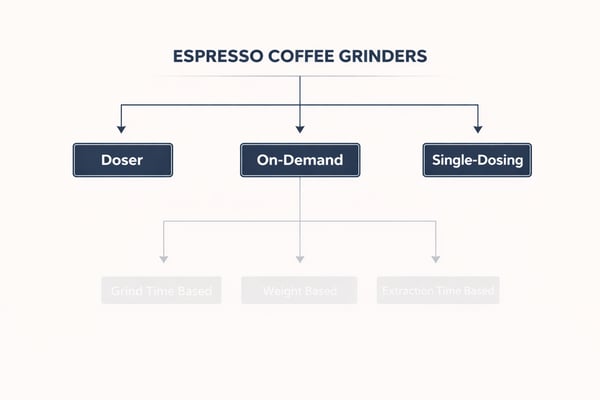
Broadly, there are three different types of espresso grinders.
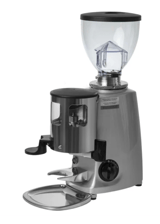
Doser Grinders
Doser grinders were the industry standard for decades, particularly throughout the 1980s and 1990s. At the time, speed was prioritised over freshness and consistency, and grinding batches of coffee into a doser allowed cafés to serve drinks quickly during busy periods. As expectations around coffee quality increased, their limitations around consistent dosing and freshness became more apparent.
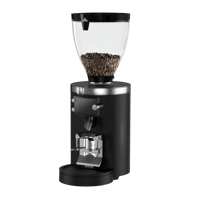
On-Demand
On-demand grinders rose to prominence alongside the third-wave coffee movement, as freshness, consistency, and control became central to quality coffee service. Advances in electronics and sensors have since made them faster, more accurate, and more reliable in high-volume commercial environments. Coffee is ground fresh and to order, with consistent dosing systems ensuring quality in each shot.
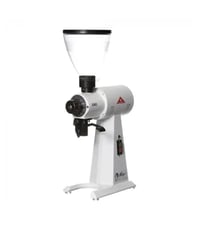
Single Dosing
Single dosing grinders emerged from the home-barista and specialty coffee worlds, driven by a desire to eliminate grind retention and allow frequent bean changes. Initially niche, the category has grown rapidly as manufacturers have refined designs to improve workflow and reduce mess.
How These Different Grinder Types Work
Doser grinders grind coffee into a holding chamber positioned at the front of the machine. This chamber stores ground coffee until a lever is pulled, dispensing a portion into the portafilter. Because coffee is ground in advance, it is exposed to air for longer periods, which impacts freshness. Dosing is largely mechanical and influenced by how full the doser is at any given time.
On-demand grinders grind coffee only when activated, delivering grounds directly into the portafilter. Beans are stored in a hopper and ground fresh for each shot. Dosing is controlled electronically, either by grinding for a set time, grinding to a target weight, or in advanced systems, adjusting based on extraction feedback. This approach significantly improves freshness and consistency while supporting faster, more repeatable workflows.
Single dosing grinders operate without a hopper. Each dose of coffee is weighed manually, added to the grinder, and ground through the burrs before the next dose is prepared. This minimises retention and allows operators to change coffees frequently. The process prioritises precision and flavour clarity but requires more hands-on involvement from the operator.
Dosing System Options for On-Demand Grinders
On-demand grinders all work on the same core principle: coffee is ground only when it is needed. The barista places the portafilter into the grinder, activates the dose, and within a few seconds receives a fresh, consistent portion of ground coffee. This approach minimises waste, preserves flavour, and delivers the consistency required in modern commercial coffee service.
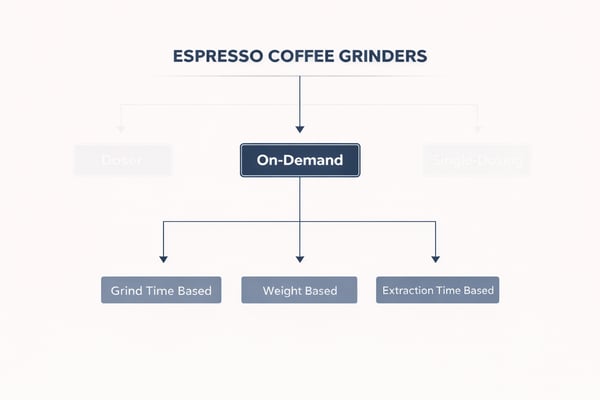
Within the on-demand category, grinders are further differentiated by how the dose is controlled. There are three main dosing systems used in commercial environments.
Grind Time Based Dosing
Grind time based grinders dose coffee by running the burrs for a set amount of time. For example, the grinder may be programmed to grind for three seconds for a single shot and six seconds for a double. This is the most common dosing method used in commercial coffee.
It is fast, simple, and well suited to high-volume service. Because the dose is controlled by time rather than weight, adjustments are occasionally needed as grind size, bean density, or coffee age changes.
Weight Based Dosing (Gravimetric or Grind-by-Weight)
Weight based grinders measure the coffee as it is ground and stop automatically once the target weight is reached. This system is often referred to as gravimetric dosing (as used by Mythos) or grind-by-weight (as used by Mahlkönig).
By dosing to a precise weight rather than time, these grinders deliver higher consistency and require fewer manual adjustments throughout the day. The added accuracy comes with increased cost and more advanced internal components.
Extraction Time Based Dosing (Grind-by-Sync)
Extraction time based grinders connect directly to the espresso machine and use shot data to manage grind size automatically. Sometimes called grind-by-sync, these systems adjust the grind when shots run too fast or too slow.
This approach uses real extraction performance rather than a fixed setting, helping to maintain consistent shot times with minimal barista intervention. It requires compatible equipment and is typically found in more advanced, premium commercial setups.
Drawbacks of Each Espresso Grinder Type
While each grinder type has its place, none are without compromise. Understanding the limitations is just as important as understanding the benefits, particularly in commercial environments where workflow, consistency, and staff skill levels all come into play.
Doser grinders present the most obvious drawbacks in modern coffee service. Because coffee is ground in advance and held in a chamber, freshness deteriorates quickly as the grounds are exposed to oxygen. Dosing consistency can fluctuate depending on how full the doser is and how it is operated, making it difficult to achieve repeatable results across different staff members.
On-demand grinders significantly reduce many of the issues associated with doser systems, but they are not without limitations. Hopper-based designs make frequent coffee changes less practical, which can be restrictive for venues offering multiple coffees or rotating menus. Additionally, the upfront investment is higher than older mechanical grinders, which can be a barrier for cost-sensitive operations.
Single dosing grinders are most popular with home baristas, where a lack of hopper and dosing system allows enthusiasts to swap between coffees and change grind settings often, with zero/low retention between shots. However, large commercial single dose grinders such as the Mahlkonig EK43 are excellent choices for grinding large batches of filter coffee or grinding for retail bag purchases.
Which Grinders Should Businesses Be Considering?
Now that you understand the different types of grinders available, you might want to know which grinders are currently recommended by ourselves and other commercial coffee providers.
Due to their issues with dose consistency and coffee freshness, doser grinders are no longer recommended. Their legacy benefit of speed is no longer a unique selling point, as on-demand grinders are now capable of grinding fresh shots of coffee in as little as 3 second.
Here is a quick list of grinders you may want to consider:
Anfim Luna: Affordable, fast and consistent time-based grinding
Mahlkönig E65S / E80S: High speed, quality grinding with time, weight or extraction based dosing options.
Mythos Grinders e.g. MY75: High speed flat burr grinders for consistently dosed, delicious coffee.
Mahlkönig EK43: specialist grinder often used for single origin coffees, decaf coffees, or grinding retail bags.
Researching Coffee Equipment? Check out our free ebook!
