

In most cases, installing a new commercial coffee machine takes between 2 and 6 weeks from order to being fully operational.
The reason the timeframe can vary so widely is that installation isn’t a single step. It’s a combination of processes, each of which can influence the overall timeline depending on staff readiness, the site itself, the machine specification, and its availability.
A very common question our new customers have is, how long will it take to install my new machine? . In this article, we'll quickly explain the factors that influence the timeframe and why it can vary dramatically, and things that you can do to help speed up the process.
Order to Delivery Time 0-10 wks
The biggest factor influencing how long it takes to install a new coffee machine is how quickly the machine can be delivered after the order is placed.
In many cases, manufacturers can deliver machines within 2–4 weeks, but this is heavily dependent on availability and how the machine is supplied. Some machines are held in UK stock, while others are ordered from manufacturers overseas, and shipped to the UK once the purchase is confirmed.
Certain models are built to order, which naturally extends the delivery timeframe.
When purchasing a new machine, it’s important to ask about typical delivery times and whether the specific model you’re choosing is stocked, ordered in, or built to order.
As a general guide:
- Machines held in UK stock: 0–2 weeks
- Machines ordered at point of purchase: 2–4 weeks
- Machines built to order: 6-10 weeks
Pre-Installation Check 1-2hrs
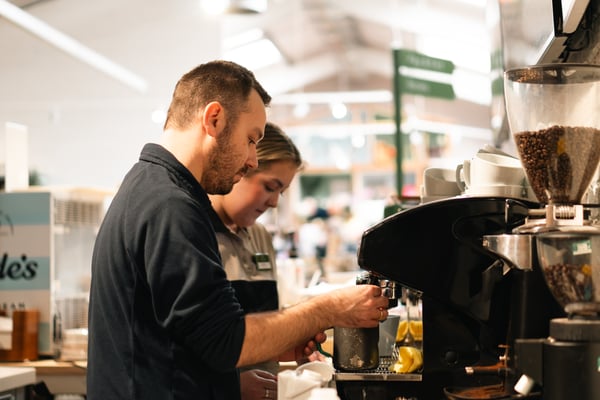
Before installation, a Bridge Coffee Roasters engineer will carry out a short pre-installation visit to make sure your site is ready for a smooth and successful install. This visit can often take place while the machine is being ordered or delivered, especially if power requirements are relatively standard, so it typically does not add time to the overall installation timeframe.
During the visit, our engineer will check key practical requirements such as power capacity, water supply and quality, plumbing, available space, and the proposed machine position. If any changes are needed, clear recommendations will be provided. These might include minor works such as adjusting the layout, creating additional space, or preparing counters for installation.
Acting on these recommendations promptly is important, as delays at this stage are one of the most common reasons installations are postponed.
The visit itself is straightforward and typically takes 1–2 hours, depending on site readiness and machine complexity.
Installation Time 2-4hrs
Once the pre-installation check has been completed and the site is ready, the installation itself is usually completed within 2–4 hours, depending on the type of machine being installed. Installations are typically carried out by one or two engineers, and the machine is usually delivered the day before to help keep things running smoothly.
For traditional espresso machines, installation typically takes around 2–2.5 hours. This includes positioning the machine, connecting power, water and drainage, installing the water filter, and carrying out initial setup checks.
Bean-to-cup machines generally take longer, usually 3–4 hours, as they require additional configuration. This includes setting up menus, drink types, cup sizes, and software, as well as testing every drink using the correct cups to ensure consistency and quality.
During installation, engineers will also complete any required calibration, such as:
- Setting grind sizes and recipes
- Configuring drink temperatures and extraction parameters
- Calibrating milk recipes for machines with automatic milk systems
Water filtration is typically installed at the same time as the machine, ensuring the equipment is protected and the coffee performs as intended from day one.
Introductory Training Session 2-3hrs
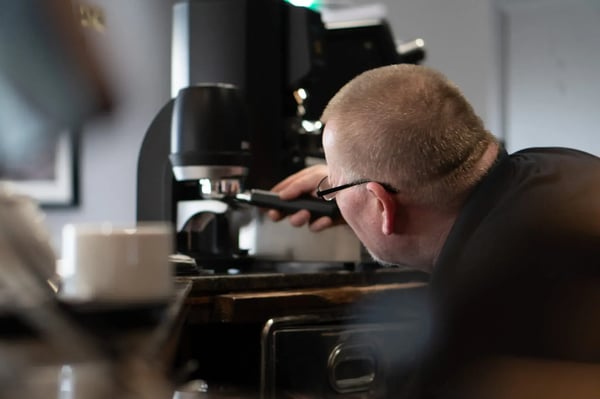
Once installation and calibration are complete, an introductory training session ensures your team is confident using the machine from day one. For bean-to-cup machines, training is usually carried out immediately after installation by our engineers, who will take a small group of staff through day-to-day operation, drink selection, and essential cleaning routines.
For traditional espresso machines, initial training typically takes place in the days following installation and is delivered by one of our barista trainers. This session focuses on grinder calibration, recipe setup, milk steaming, and latte art, helping teams build consistency and confidence. Training sessions usually last between 2 and 3 hours, depending on team size and experience.\